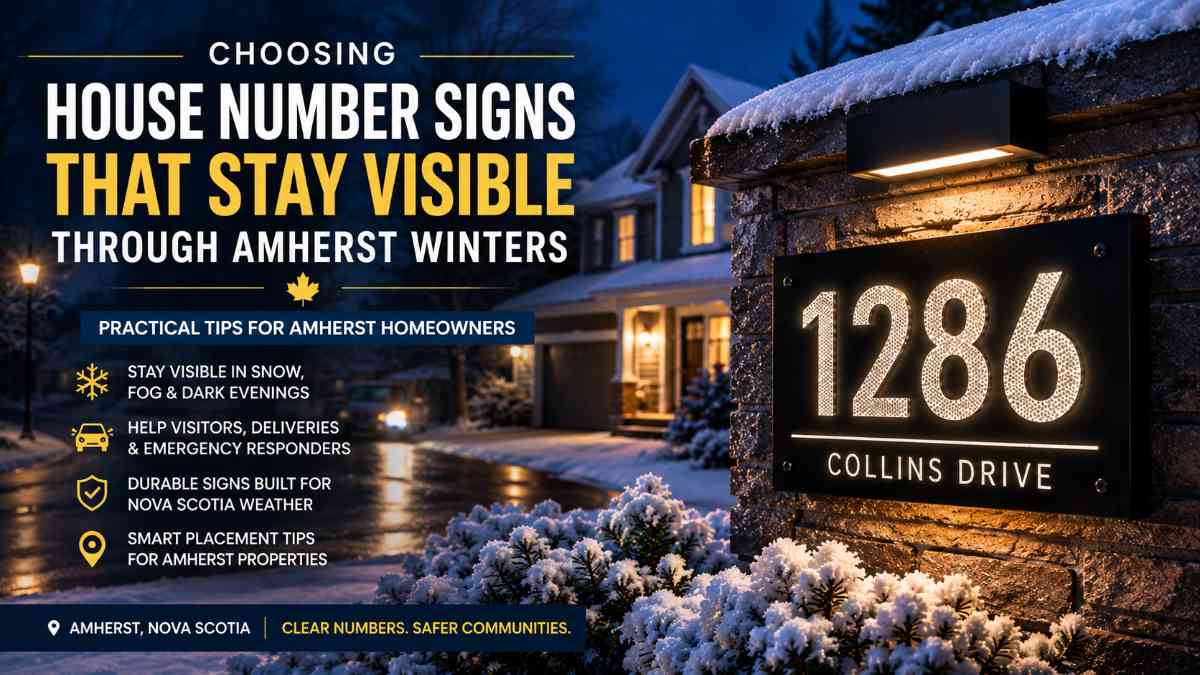
Many visibility problems are caused by small issues that often go unnoticed. Poor contrast, low mounting height, faded finishes, or landscaping obstruction can gradually reduce readability without homeowners realizing how difficult the address has become to spot from a moving vehicle.
A well-designed house number sign combines practical visibility, durable materials, and thoughtful placement suited to local weather conditions and residential layouts common throughout Amherst.
Why House Number Visibility Changes During Amherst Winters
Winter conditions create a different visibility environment compared to warmer seasons. Snow accumulation, reduced daylight, moisture, and road glare all affect how quickly an address can be identified.
Snowbanks Frequently Cover Lower-Mounted Signs
One of the most common winter visibility issues in Amherst involves address signs mounted too low near driveways, fences, or landscaping features. After repeated snowfall and plowing, snowbanks can partially or completely hide smaller civic numbers.
This becomes especially noticeable in neighborhoods where roadside snow remains for extended periods during colder months.
Earlier Sunsets Reduce Residential Visibility
During winter, daylight fades much earlier across Nova Scotia. Homes located on shaded streets or surrounded by trees often become darker well before evening traffic decreases.
Without reflective materials or proper exterior lighting, address numbers can become difficult to identify quickly from the road.
Wet Roads and Freezing Rain Affect Contrast
Rain, slush, and freezing conditions create reflective glare that reduces visibility during nighttime driving. Dark address numbers mounted on darker backgrounds often disappear under these conditions.
Higher contrast combinations usually remain easier to read during storms and wet weather.
Fog and Snowfall Limit Distance Visibility
Amherst weather can shift quickly during winter storms. Snowfall and fog reduce the visible distance drivers have to identify properties while moving through residential streets.
Reflective materials help improve readability because vehicle headlights illuminate the address directly.
Common Address Visibility Problems Homeowners Often Overlook
Many homeowners assume their address numbers are easy to see because they appear clear during daylight while standing near the property. Visibility conditions from the roadway can be very different.
Decorative Number Styles Becoming Difficult to Read
Thin fonts and highly decorative number designs may look modern but often reduce readability at night or during poor weather conditions.
Simple, clean number shapes are usually easier to identify quickly from moving vehicles.
Dark Siding Reducing Number Contrast
Modern homes frequently use charcoal, dark grey, navy, and black exterior finishes. While visually appealing, darker siding can make address numbers difficult to distinguish if similar colors are used.
Contrast remains one of the most important factors in residential visibility.
Landscaping Gradually Blocking Visibility
Shrubs, fencing, flower beds, and seasonal growth can slowly obstruct address numbers over time. Many visibility issues develop gradually rather than immediately.
Periodic visibility checks from the roadway help identify these problems early.
Porch Lighting That Misses the Address Completely
Exterior lights may brighten entryways while leaving address numbers partially shadowed. Lighting placement matters just as much as brightness.
Where House Number Signs Work Best on Amherst Properties
Placement strongly influences how quickly drivers can locate a home, especially during winter evenings or poor weather conditions.
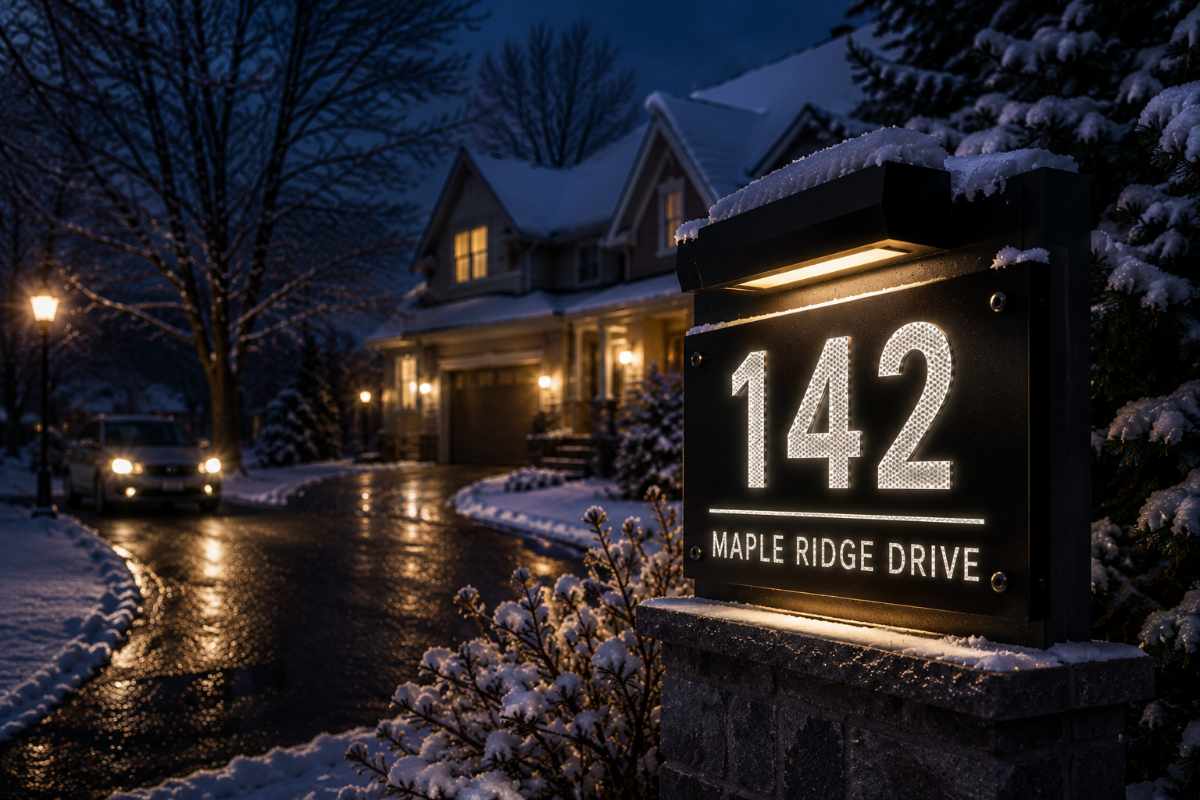
Driveway Entrance Placement for Longer Properties
Homes with longer setbacks often benefit from signage installed near the driveway entrance rather than near the front door.
Drivers can identify the property earlier without slowing down or searching near the home itself.
Higher Mounting Heights During Snowy Conditions
Signs mounted slightly higher remain visible longer during winter because they avoid becoming hidden behind snowbanks.
This is particularly useful for roadside posts and fence-mounted address numbers.
Visibility from Both Driving Directions
Residential streets in Amherst often require visibility from multiple approach angles. Corner lots and curved roads may require placement adjustments to improve readability.
Avoiding Obstruction from Trees and Decorative Features
Address signs should remain visible year-round, including during summer landscaping growth and winter snow accumulation.
Reflective House Number Signs in Amherst Neighborhoods
Reflective address signs have become increasingly common because they improve nighttime readability without requiring bright external lighting.
How Reflective Materials Improve Night Visibility
Reflective surfaces respond directly to vehicle headlights, making numbers easier to identify during darker evenings and poor weather.
This becomes especially useful on residential roads with limited municipal lighting.
Why Reflective Numbers Work Well During Winter
Snowfall and fog reduce visibility distance during winter months. Reflective materials help improve readability sooner as drivers approach the property.
Situations Where Reflective Signs Make the Biggest Difference
Reflective signs are often most useful for:
- Homes farther from the roadway
- Rural or semi-rural properties
- Streets with minimal lighting
- Shared driveways
- Areas with frequent snowfall or fog
Reflective Signs Versus Standard Painted Numbers
Standard painted numbers rely entirely on surrounding light sources, while reflective finishes improve visibility independently through headlight reflection.
Materials That Handle Nova Scotia Weather More Reliably
Outdoor signage in Amherst remains exposed to moisture, freezing temperatures, UV exposure, and seasonal weather changes throughout the year.
Powder-Coated Aluminum and Rust Resistance
Powder-coated aluminum remains popular because it handles moisture exposure well while resisting corrosion and surface deterioration.
Acrylic Materials and Outdoor Durability
UV-resistant acrylic panels maintain appearance and readability during changing weather conditions without warping easily.
Stainless Steel Mounting Hardware
Mounting hardware plays an important role in long-term durability. Corrosion-resistant fasteners help maintain stability during snow, rain, and freezing temperatures.
Why Lower-Quality Finishes Fade Faster
Outdoor exposure gradually affects lower-quality paints and coatings. Fading reduces readability and contrast, especially during nighttime conditions.
Illuminated House Number Signs for Low-Light Areas
Some Amherst properties benefit from illuminated address signage, particularly in areas with limited lighting or longer driveways.
Why Illuminated Signs Improve Night Visibility
Illuminated signs remain consistently visible regardless of surrounding lighting conditions. This helps improve readability during snowstorms, fog, and darker evenings.
Homes That Often Benefit from LED Address Signs
Illuminated signs are commonly useful for:
- Rural properties
- Long driveways
- Shared entrances
- Homes surrounded by trees
- Areas with low street lighting
Warm White Versus Bright White Lighting
Different lighting tones affect visibility differently. Warm lighting often creates softer appearance, while brighter white illumination improves contrast from longer distances.
Winter Conditions Where Illumination Helps Most
Heavy snowfall, freezing rain, and fog are conditions where illuminated numbers often remain easier to identify than non-lit signage.
Emergency Visibility and Residential Address Identification
Clear address visibility supports faster navigation during urgent situations.
Faster Identification During Snowstorms
Poor weather conditions slow visibility for all drivers, including emergency responders. Readable address signs help reduce unnecessary confusion during winter conditions.
Shared Driveways and Multi-Unit Properties
Properties with basement suites, duplexes, or multiple entrances benefit from clearer number visibility and directional distinction.
Rural Navigation Challenges Near Amherst
Outside denser residential areas, properties often rely more heavily on visible civic signage because fewer surrounding landmarks exist.
Visibility During Power Outages
Reflective signs continue responding to headlights even during outages when exterior house lighting may not function.
Questions Amherst Homeowners Often Ask About House Number Signs
How large should house numbers be for better roadside visibility?
Larger numbers are generally easier to identify from moving vehicles, especially on properties with longer setbacks or darker surroundings.
Are reflective address signs useful on residential streets?
Reflective signs improve visibility in many residential areas, particularly during winter evenings and poor weather conditions.
Where should signs be mounted on long driveways?
Driveway entrance placement usually provides better visibility than mounting signs close to the front entrance of the home.
Which materials perform best during Nova Scotia winters?
Powder-coated aluminum, UV-resistant acrylic, and stainless steel hardware generally perform reliably during changing weather conditions.
Do illuminated signs improve visibility significantly?
Illuminated signs often improve readability noticeably during snowfall, fog, rain, and low-light conditions.
How often should address signs be checked?
Seasonal checks help identify fading, snow obstruction, landscaping issues, and lighting problems before visibility becomes difficult.
Final Thoughts on House Number Visibility in Amherst
Residential visibility depends on more than simply installing address numbers on a home. Placement, contrast, lighting, material quality, and seasonal weather conditions all influence how easily a property can be identified throughout the year.
In Amherst and surrounding Nova Scotia communities, reflective and well-positioned house number signs help improve navigation during snowstorms, darker evenings, rain, and changing winter conditions without overwhelming the appearance of the property.
Small visibility improvements often make a noticeable difference for deliveries, visitors, contractors, and emergency access during the months when clear address identification matters most.
Legal Requirements for Address Visibility in Amherst
Under Nova Scotia's Municipal Government Act and the National Fire Code of Canada 2020 (Section 2.2.1.2), Amherst homeowners are required to display their civic address number in a location visible from the street. Address numbers must be maintained and remain free of obstructions throughout the year.
Amherst's municipal property standards bylaw reinforces these requirements. Non-compliance can result in enforcement action, particularly when address visibility affects emergency response access.
For a full breakdown of what the law requires, see our Nova Scotia House Number Law Guide.
Related Guides
Frequently Asked Questions About House Number Signs in Amherst
Does Amherst require a visible house number?
Yes. Like the rest of Nova Scotia, Amherst properties must display their civic number so emergency services can find them. Details in our NS house number law guide.
What handles Amherst's wind and winter weather?
Marsh winds are hard on cheap plastic signs. Powder-coated aluminum civic numbers with stainless hardware hold up for years.
Can I get a sign with my street name too?
Yes — see our house number and street name signs, lit or unlit.
How do I order without using the website?
Call +1 (833) 860-9292. We will choose the size and style with you and ship it free.
Order Your Amherst House Number Sign
Start with an illuminated civic number or a metal plaque, or phone +1 (833) 860-9292 for design help.