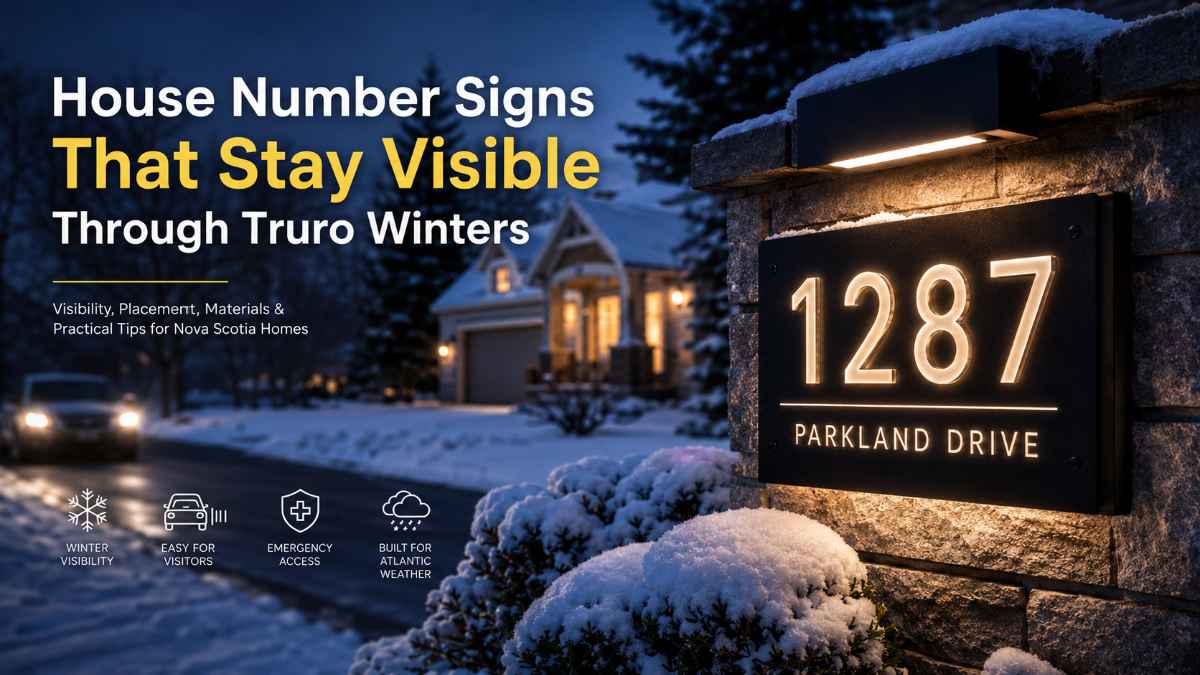
A well-placed and readable house number sign helps improve visibility throughout changing weather conditions without affecting the appearance of the home. Material choice, contrast, lighting, and placement all contribute to how effectively a sign performs during different seasons in Nova Scotia.
Why Address Visibility Becomes More Difficult During Truro Winters
Winter conditions across Truro create several visibility challenges that homeowners may not notice during warmer months. A sign that appears perfectly readable during summer afternoons can become difficult to identify once snowbanks, fog, and low-light conditions arrive.
Snowbanks Reducing Visibility Along Residential Roads
Snow removal changes the visible height of many residential properties during winter. Lower-mounted signs placed near driveways, fences, or walkways can become partially hidden behind plowed snow.
This is especially common after repeated snowfall periods when roadside snowbanks gradually increase in height throughout the season. Signs mounted slightly higher often remain easier to identify from approaching vehicles.
Darker Winter Evenings Affecting Address Readability
Shorter daylight hours reduce visibility much earlier during winter months. In Truro neighborhoods with limited street lighting, address numbers may become difficult to spot well before nighttime.
Homes with darker siding or shaded entrances can experience even lower contrast during evening conditions, particularly during rain or snowfall.
Fog and Freezing Rain Reducing Contrast from the Road
Nova Scotia weather frequently includes fog, mist, and freezing rain that affect how light reflects from outdoor surfaces. Address numbers with low contrast or glossy finishes may become difficult to read when moisture accumulates on exterior walls or sign surfaces.
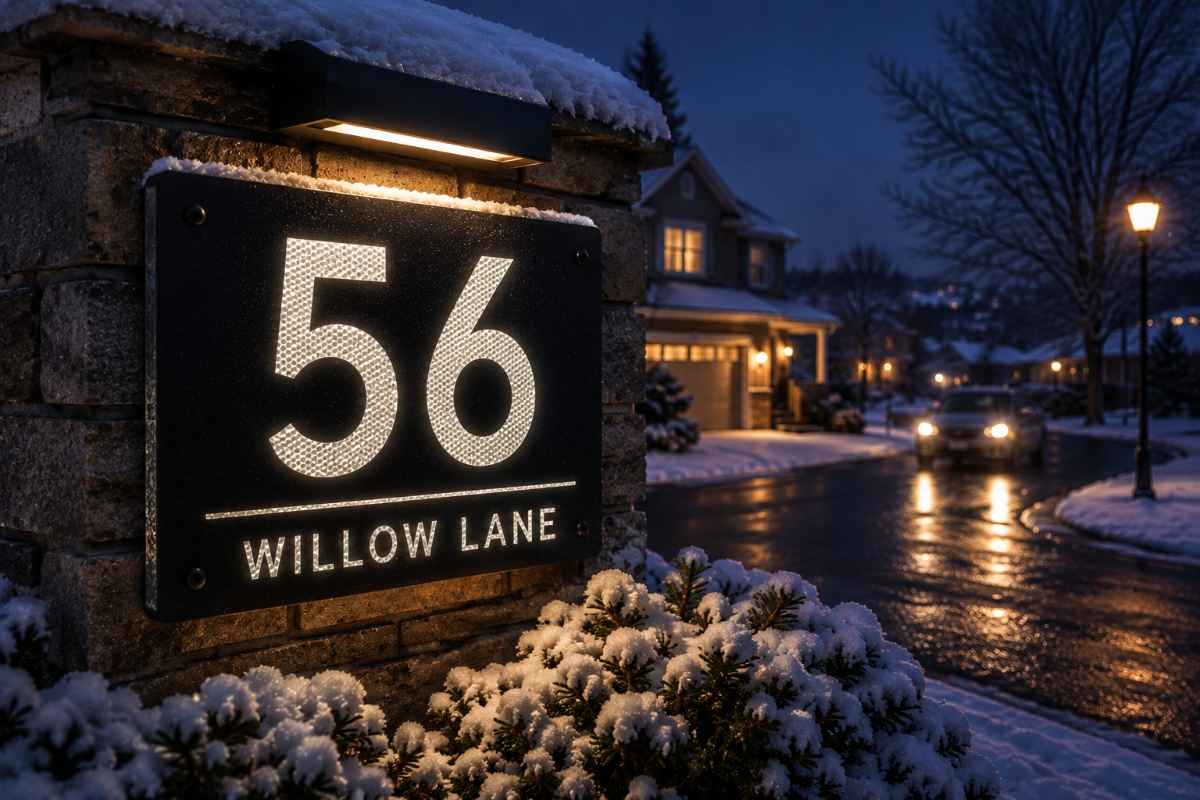
Reflective materials often improve readability in these conditions because headlights help illuminate the address more clearly.
Long Rural Driveways Common Around Truro Properties
Many homes outside central residential areas sit farther back from the roadway. In these situations, signs mounted near the front entrance may not provide enough visibility for drivers approaching the property.
Roadside placement near the driveway entrance usually improves visibility much earlier and reduces navigation confusion.
Limited Street Lighting in Residential and Semi-Rural Areas
Not all neighborhoods receive strong municipal lighting coverage. Some residential roads rely primarily on porch lights and vehicle headlights for nighttime visibility.
Address signs that depend entirely on ambient lighting may become difficult to identify quickly during darker weather conditions.
The Difference Between Decorative House Numbers and Readable Address Signs
House number signs often balance appearance and functionality. While decorative styles can complement a home's exterior design, readability remains the most important factor during nighttime and winter conditions.
Thin Fonts That Become Difficult to Read After Dark
Certain modern number styles use narrow or stylized fonts that appear clean during daylight hours but lose visibility from a distance.
At night, thinner designs reflect less light and become harder to recognize while drivers are moving. Simpler number shapes usually improve readability during poor weather conditions.
Why Contrast Matters More Than Style
Contrast between the address numbers and background surface strongly affects visibility. Black numbers mounted on dark siding or silver finishes installed on reflective metal backgrounds often reduce readability.
Higher contrast combinations tend to remain easier to identify during rain, snowfall, and low-light conditions.
Reflective Finishes Versus Painted Surfaces
Standard painted numbers depend entirely on surrounding light sources. Reflective materials respond differently because vehicle headlights help illuminate the surface directly.
This becomes especially useful during Truro winters when visibility conditions change quickly throughout the day.
Visibility Problems Caused by Dark Exterior Siding
Modern exterior color palettes commonly include charcoal, dark grey, navy, and black finishes. While visually appealing, these colors can reduce the visibility of darker address numbers significantly.
Choosing finishes that stand out from the mounting surface improves readability without changing the overall appearance of the property.
Placement Mistakes That Commonly Reduce Address Visibility
Many address visibility issues are related more to placement than the sign itself. Even high-quality signs can become ineffective when mounted in locations that are difficult to see from the road.
Mounting Signs Too Close to Entry Doors
Address numbers placed directly beside front doors may remain visible for visitors standing at the entrance but difficult to identify from approaching vehicles.
This is especially common on properties with angled walkways or recessed entry areas.
Low Placement Becoming Hidden by Snow Accumulation
Lower-mounted signs often disappear behind snowbanks during winter storms. Fence-mounted numbers and short driveway posts can become partially covered after repeated snow clearing.
Higher placement usually improves visibility throughout the season.
Trees, Fencing, and Landscaping Blocking Sightlines
Landscaping changes gradually over time. Trees, shrubs, decorative fencing, and seasonal plants may slowly block address visibility without homeowners immediately noticing the issue.
Checking visibility periodically from the roadway helps identify these problems early.
Corner Lots Requiring Multi-Directional Visibility
Homes positioned on intersections or corner properties often need visibility from more than one direction. A sign visible from one roadway may remain hidden from another approach angle.
Placement should consider how drivers naturally approach the property.
Why Driveway Entrance Placement Often Works Better
For homes with longer setbacks, placing the address sign near the driveway entrance often improves readability significantly. Drivers can identify the property earlier rather than slowing down near the house searching for numbers.
How Truro Weather Conditions Affect Outdoor Address Signs
Outdoor signs remain exposed to changing weather conditions throughout the year. Material durability becomes especially important in Nova Scotia because of moisture, temperature changes, and winter exposure.
Freeze-Thaw Cycles and Material Expansion
Repeated freezing and thawing can affect lower-quality materials over time. Expansion and contraction may loosen mounting hardware or create surface wear.
Weather-resistant materials generally maintain their appearance longer during seasonal temperature shifts.
Moisture Exposure During Extended Rainfall Periods
Nova Scotia experiences frequent rain and moisture exposure throughout the year. Signs installed on exposed walls or open properties may remain wet for extended periods.
Moisture-resistant finishes help reduce fading, warping, and surface deterioration.
Snow Removal Equipment Creating Visibility Challenges
Snow clearing equipment can accidentally damage lower-mounted signs placed near driveways or roadside edges.
Placement away from plow contact areas helps improve long-term durability.
UV Exposure During Summer Months
Although winter visibility receives most attention, summer sun exposure also affects outdoor signage. Lower-quality finishes may fade unevenly after prolonged UV exposure.
Wind Exposure on Open Rural Properties
Rural properties around Truro often experience stronger wind exposure during storms and winter weather systems. Secure mounting hardware helps prevent movement and long-term structural wear.
Materials That Handle Nova Scotia Conditions More Reliably
The materials used in outdoor address signs influence both durability and readability over time.
Powder-Coated Aluminum for Long-Term Durability
Powder-coated aluminum remains popular because it resists rust and handles moisture exposure well. It also maintains color consistency better than many untreated materials.
Acrylic Sign Panels and Moisture Resistance
UV-resistant acrylic materials provide strong weather resistance while maintaining clean visibility and surface clarity outdoors.
Corrosion Concerns Near Coastal and High-Moisture Areas
Homes closer to coastal regions often experience additional exposure to salt air and moisture. Corrosion-resistant materials and mounting hardware help improve long-term performance.
Mounting Hardware That Performs Better Outdoors
Even durable signs can develop problems if mounting hardware corrodes or loosens. Stainless steel fasteners generally perform better in Atlantic Canadian weather conditions.
Why Low-Quality Finishes Fade Faster Over Time
Lower-quality paints and coatings may begin fading unevenly after prolonged exposure to moisture, snow, and sunlight. Fading reduces readability and contrast over time.
Night Visibility Challenges Homeowners Often Notice Too Late
Some visibility issues become obvious only after winter arrives or nighttime conditions expose weaknesses in placement and readability.
Porch Lighting That Fails to Illuminate Address Numbers
Exterior lighting may brighten entryways without properly illuminating the address itself. Shadows and directional lighting angles often reduce readability unexpectedly.
Reflective Glare During Wet Road Conditions
Wet pavement and reflective moisture can create glare that makes low-contrast numbers harder to distinguish from surrounding surfaces.
Small Numbers Becoming Difficult to Read from Moving Vehicles
Smaller address numbers may appear adequate while standing nearby but difficult to identify from a moving vehicle, especially during poor weather conditions.
Homes Set Back Farther from the Road
Properties positioned farther from the roadway typically require stronger contrast, larger numbers, or reflective visibility features to remain readable.
Why Emergency Visibility Matters in Residential Areas
Clear address visibility supports more than convenience. During emergencies, responders rely on visible house numbers to identify properties quickly.
Faster Property Identification During Winter Conditions
Snowfall, reduced visibility, and nighttime driving conditions can slow navigation. Readable address numbers help reduce unnecessary delays.
Shared Driveways and Multi-Unit Properties
Properties with secondary suites or shared entrances often require clearer address distinction to avoid confusion for deliveries and visitors.
Rural Navigation Challenges During Night Calls
Homes outside dense residential areas may rely heavily on visible signage because fewer surrounding landmarks are available during nighttime conditions.
Visibility During Storm Conditions and Power Outages
During storms or power outages, reflective address signs may remain easier to identify using vehicle headlights alone.
Reflective and Illuminated Signs in Truro Neighborhoods
Different visibility solutions work better depending on the property layout and surrounding lighting conditions.
When Reflective Numbers Provide Enough Visibility
Reflective materials often improve visibility significantly on standard residential streets with moderate lighting conditions.
Situations Where Illuminated Signs Become More Practical
Homes with long driveways, darker surroundings, or limited lighting may benefit more from illuminated address signs.
Streets with Lower Ambient Lighting
Some residential areas receive minimal street lighting, making reflective or illuminated numbers more useful during winter evenings.
Address Visibility During Snowfall and Fog
Illuminated signs remain visible more consistently during snowfall, fog, and heavy rain because they do not rely entirely on external lighting sources.
Common Upgrades Homeowners Make After Visibility Problems
Many homeowners adjust their address signage only after experiencing visibility issues during winter.
Replacing Smaller Address Numbers
Larger numbers often improve visibility more effectively than decorative redesigns alone.
Switching to Higher Contrast Finishes
Simple finish changes can improve readability significantly without changing the home's overall appearance.
Moving Signs Closer to the Roadway
Placement adjustments near the driveway entrance frequently reduce delivery confusion and navigation problems.
Adding Reflective or Illuminated Visibility Features
Improved visibility features become more valuable during darker winter conditions and limited street lighting.
Updating Older Faded Civic Numbers
Over time, fading and weather exposure reduce contrast and readability. Replacing worn signs helps maintain consistent visibility.
Questions Truro Homeowners Often Ask About House Number Signs
How large should house numbers be for rural properties?
Homes positioned farther from the roadway generally benefit from larger address numbers because visibility decreases quickly during snowfall, rain, and darker evenings.
Are reflective address signs useful on residential streets?
Reflective signs often improve nighttime readability even in standard residential neighborhoods, especially during winter months when daylight hours are shorter.
Where should civic signs be installed on long driveways?
For longer driveways, placement closer to the roadway usually improves visibility more effectively than mounting signs near the home entrance.
Which materials last longest during Nova Scotia winters?
Powder-coated aluminum, stainless steel hardware, and UV-resistant acrylic materials generally perform well during changing Nova Scotia weather conditions.
Do illuminated signs help during snowstorms and fog?
Illuminated signs can improve visibility during snowfall, fog, and darker evenings because the address remains visible without depending entirely on external lighting.
How often should address signs be checked for visibility?
Seasonal visibility checks help identify problems caused by landscaping growth, snow accumulation, fading finishes, or lighting changes.
Final Thoughts on Residential Address Visibility in Truro
Address visibility affects everyday navigation more than many homeowners initially expect. Seasonal weather, lighting conditions, landscaping, and placement all influence how quickly a property can be identified from the road.
In Truro and surrounding Nova Scotia communities, signs that remain readable throughout winter conditions often combine practical placement, durable materials, clear contrast, and thoughtful visibility planning. Small adjustments can make a noticeable difference during snowstorms, darker evenings, and changing seasonal conditions without affecting the overall appearance of the home.
Legal Requirements for Address Visibility in Truro
Under the National Fire Code of Canada 2020 (Section 2.2.1.2) and Truro's municipal property standards bylaw, homeowners must display their civic address number where it is clearly visible from the street. Numbers must be maintained and kept free from obstructions such as snow, landscaping, or fading.
Ensuring your address remains visible year-round is a legal requirement that supports emergency response, waste collection, and delivery access. Non-compliance can result in property standards notices.
For a full breakdown, see our Nova Scotia House Number Law Guide.
Related Guides
Frequently Asked Questions About House Number Signs in Truro
Is a visible civic number required in Truro?
Yes. Truro and Colchester County properties must display their civic number visibly for emergency response under Nova Scotia civic addressing requirements. See our Nova Scotia house number law guide.
What survives Truro winters best?
Powder-coated aluminum with reflective or backlit numbers. Snowbanks are the main problem in Truro — mount the sign high enough that plowed snow never hides it.
Do you deliver to Truro and Bible Hill?
Yes — we are Nova Scotia based, and shipping is free across the province.
Reflective or illuminated — which should I choose?
Reflective works when headlights hit the sign directly; illuminated works from every angle, all night. Homes set back from the road should choose illuminated.
Order Your Truro House Number Sign
Design your civic number sign online or call +1 (833) 860-9292 — we will design it with you over the phone and ship it free.