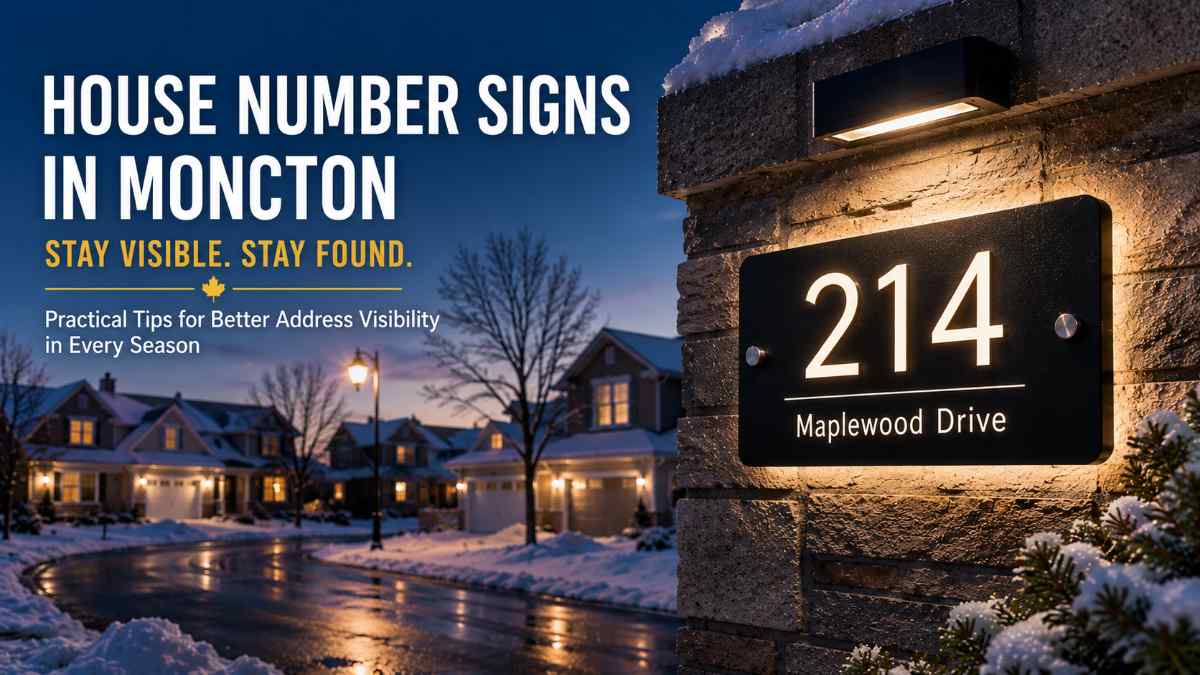
House number visibility often becomes a practical issue only after someone struggles to find the property. In Moncton and surrounding New Brunswick communities, changing weather patterns, winter conditions, neighborhood layouts, and reduced evening daylight can gradually affect how easily homes are identified from the road.
Address numbers that appear perfectly visible during summer afternoons may become difficult to recognize during snowfall, wet evenings, fog, or darker winter conditions. Moncton homeowners regularly experience changing visibility conditions throughout the year, especially as seasons affect road conditions, landscaping, and lighting environments.
For homeowners, visibility affects more than appearance. Delivery drivers, contractors, visitors, utility services, and emergency responders often rely on quick address identification when navigating residential streets and surrounding suburban areas.
This guide explores practical factors that influence address visibility throughout Moncton and explains how placement, materials, contrast, and weather conditions affect residential identification.
Why Address Visibility Can Vary Across Moncton Neighborhoods
Different residential layouts create different visibility challenges.
A home located in a compact subdivision often faces different conditions compared with properties located farther from roads or near less densely developed areas.
Compact Residential Streets and Newer Subdivisions
Many Moncton neighborhoods include homes positioned relatively close together with similar exterior layouts.
Visibility challenges sometimes include:
- Similar-looking houses
- Similar siding colors
- Driveways positioned closely together
- Trees affecting sightlines
- Parked vehicles partially blocking visibility
Drivers typically identify homes while moving rather than while standing still. Small delays in recognition can create confusion even when addresses technically remain visible.
Homes Positioned Farther Back From The Road
Properties with deeper setbacks often require additional visibility consideration.
Common situations include:
- Larger front lawns
- Longer driveways
- Angled property entrances
- Reduced roadside lighting
- Smaller address numbers becoming harder to identify
As viewing distance increases, address readability decreases quickly.
Semi-Rural Properties Around Moncton
Outside more densely developed areas, property spacing often increases.
These properties sometimes experience:
- Fewer nearby visual references
- Limited evening lighting
- Longer access roads
- Larger gaps between homes
Drivers frequently rely almost entirely on address markers rather than surrounding landmarks.
Winter Conditions Can Quietly Change Visibility
Seasonal changes affect visibility differently throughout Atlantic Canada.
Address signs that remain easy to identify during warmer months may become more difficult to notice during winter.
Snowbanks Can Change Roadside Sightlines
Snow accumulation often changes how properties appear from approaching vehicles.
Potential issues include:
- Lower-mounted signs becoming hidden
- Mailbox numbers disappearing behind snow
- Driveway markers becoming difficult to identify
- Landscaping features collecting snow
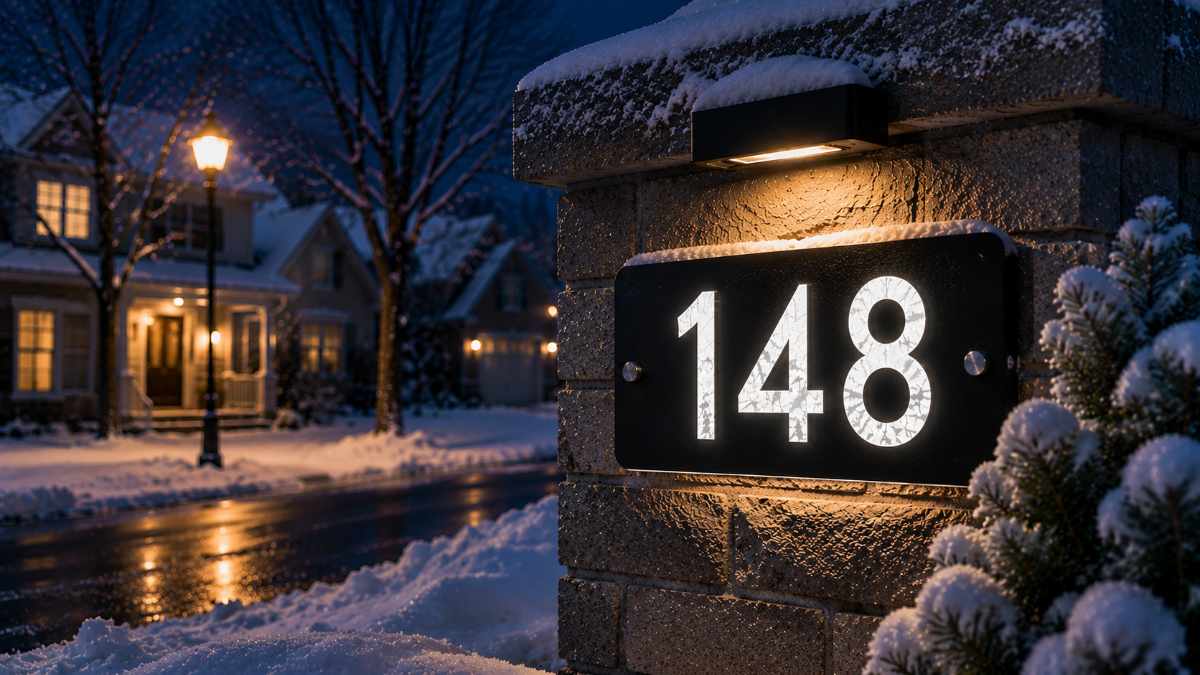
Even modest snow accumulation can change visibility considerably.
Rain And Wet Evening Conditions Affect Readability
Moncton weather frequently includes:
- Rainfall
- Wet roads
- Moisture on exterior surfaces
- Reduced evening visibility
Dark exterior finishes sometimes become harder to distinguish once surfaces become wet.
Headlight reflections may also affect visibility depending on sign materials.
Fog And Reduced Visibility Periods
Reduced visibility creates additional challenges because drivers identify homes from shorter distances.
Under these conditions:
- Viewing time decreases
- Recognition happens later
- Contrast becomes more important
- Reflective materials may become easier to notice
Daytime Visibility Does Not Always Predict Night Visibility
Many homeowners evaluate address visibility during daylight because that is when they most often see their own property.
Night conditions create a different experience.
Decorative Fonts Sometimes Reduce Readability
Some number styles emphasize appearance over quick recognition.
Examples include:
- Thin scripts
- Decorative styling
- Narrow characters
- Compressed spacing
Simple number shapes generally remain easier to identify from moving vehicles.
Vehicle Headlights Change Visibility Conditions
Addresses are usually identified while approaching rather than while stationary.
Drivers may be:
- Turning toward the property
- Navigating through rain
- Driving at lower visibility periods
- Looking for addresses quickly
Viewing angles become important because numbers rarely appear directly in front of the vehicle.
Contrast Often Matters More Than Size Alone
Larger numbers do not always improve visibility if contrast remains poor.
Examples that sometimes create visibility issues include:
- Black numbers on dark siding
- Gray finishes on stone surfaces
- Reflective silver against lighter backgrounds
Strong contrast frequently improves readability more effectively than decorative design choices.
Placement Choices Can Affect Visibility More Than Expected
Many homeowners initially focus on style and materials, but placement often influences visibility more significantly.
Front Entrance Placement
Front-door placement may work well for pedestrians but not necessarily for drivers.
Visibility limitations become more common when homes include:
- Covered porches
- Large front yards
- Landscaping near entrances
- Angled house layouts
Driveway Entrance Placement
For deeper properties, driveway entrances sometimes provide stronger visibility.
Advantages can include:
- Earlier address confirmation
- Easier recognition before passing the property
- Visibility from both directions
Mounting Height During Winter Conditions
Lower placement occasionally becomes less effective after snowfall.
Signs positioned higher may remain visible above:
- Snowbanks
- Roadside accumulation
- Decorative landscaping
- seasonal obstructions
Materials That Handle Atlantic Canadian Conditions More Reliably
Outdoor signage experiences constant exposure throughout the year.
Material choices can influence long-term performance.
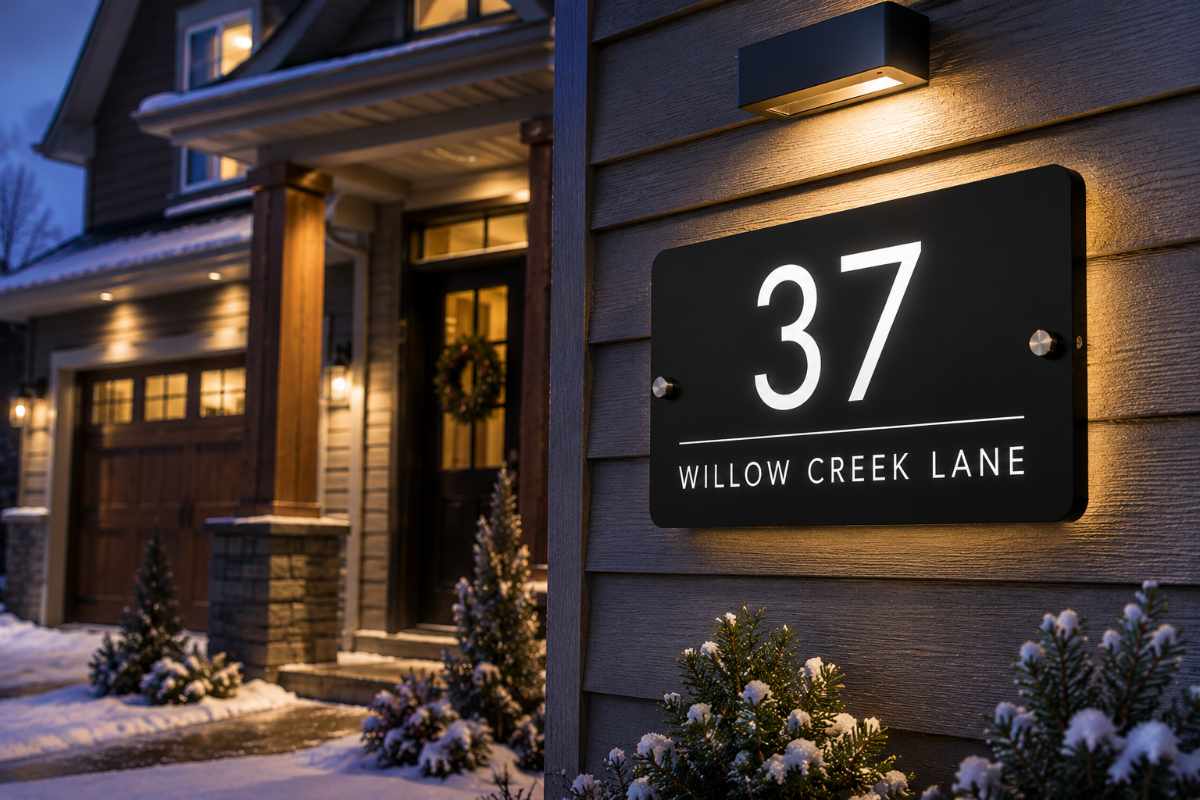
Metal Address Signs
Common characteristics include:
- Durable construction
- Weather resistance
- Lower maintenance requirements
Acrylic And Composite Materials
These materials often provide:
- Consistent appearance
- UV resistance
- Lower maintenance needs
Mounting Hardware Also Matters
Fasteners experience repeated exposure to:
- Moisture
- Snow
- Seasonal freezing
- Temperature shifts
Hardware durability affects overall sign stability.
Some Homes Need Additional Visibility Support
Certain property layouts create greater visibility challenges.
Examples include:
Corner properties
Visibility sometimes needs to work from multiple directions.
Shared driveways
Visitors occasionally confuse entrances.
Homes hidden by landscaping
Trees and shrubs may reduce visibility.
Multi-unit properties
Separate entrances may require clearer identification.
When Reflective House Numbers Become Useful
Reflective materials become easier to notice once headlights become the primary light source.
They often make practical sense for:
- Homes farther from the road
- Neighborhoods with lower ambient lighting
- Areas receiving frequent deliveries
- Streets affected by rain or fog
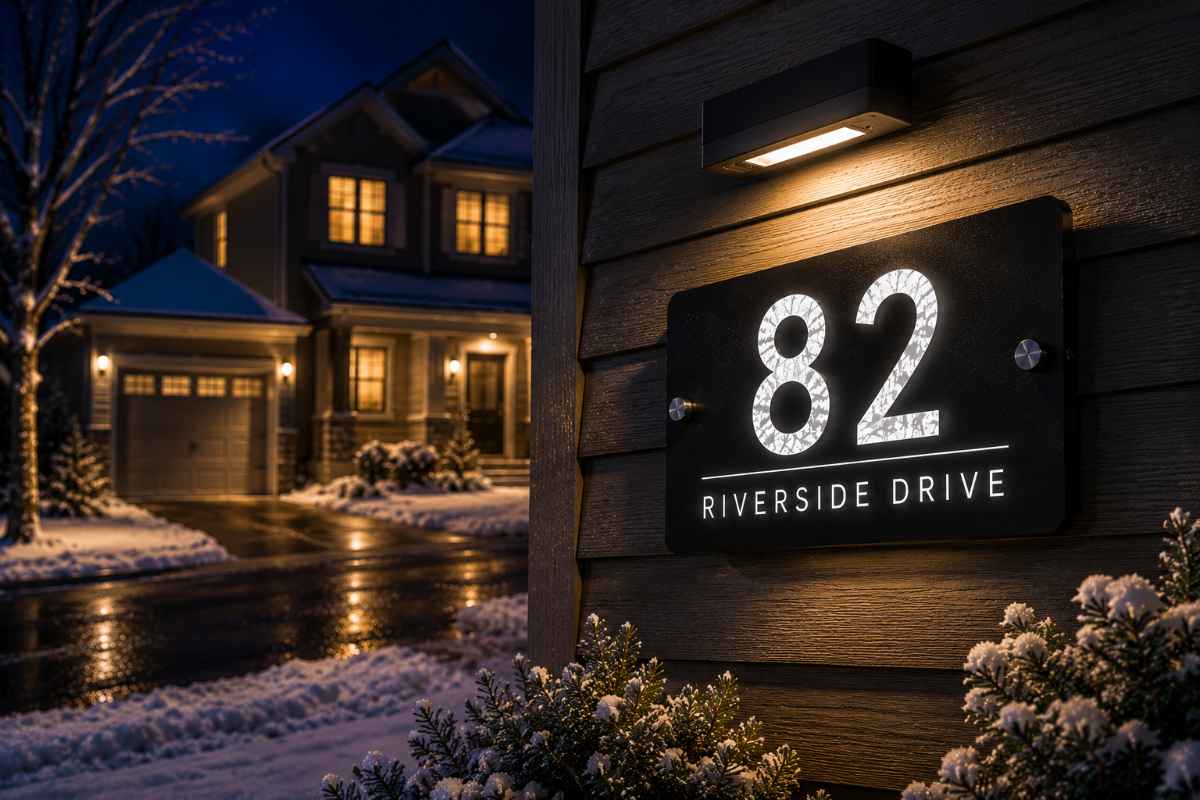
Reflective visibility does not rely entirely on porch lighting and can help improve recognition during darker periods.
Questions Moncton Homeowners Often Ask
How large should house numbers be for homes farther from the road?
Longer viewing distances usually reduce readability. Larger numbers often become easier to recognize before drivers reach the property.
Are reflective house numbers useful in residential neighborhoods?
Reflective numbers may improve visibility during shorter winter days and evening conditions where headlights become the primary light source.
Should driveway entrances have separate address markers?
Properties with long driveways often benefit from address identification closer to the roadway.
Do illuminated signs improve nighttime visibility?
Illuminated signs can help maintain more consistent visibility during rain, snow, fog, and darker conditions.
How often should address visibility be checked?
Seasonal visibility checks help identify problems caused by landscaping growth, snow accumulation, or changing weather conditions.
Looking At Your Home From The Road Instead Of From The Front Door
Visibility issues often become easier to notice when viewing the property from the perspective of someone arriving for the first time.
Walking to the street during evening conditions and observing the property from multiple angles may reveal issues that remain unnoticed during everyday routines. Small adjustments involving placement, contrast, or sign height can sometimes make a noticeable difference in how quickly a property can be identified.
Legal Requirements for Address Visibility in Moncton
In New Brunswick, displaying your house number is required under the National Fire Code of Canada 2020 (Section 2.2.1.2) and Moncton's Property Standards By-law. Buildings must have approved address numbers posted and maintained in a position visible from the street.
Failure to maintain visible address numbers can result in property standards orders and fines. Ensuring your house number sign remains readable year-round helps you stay compliant while improving safety for emergency responders and delivery services.
For a full breakdown of what the law requires, see our New Brunswick House Number Law Guide.
Related Guides
Frequently Asked Questions About House Number Signs in Moncton
Is displaying a house number required in Moncton?
Yes. Moncton's bylaws and New Brunswick's 911 civic addressing system require every property to display its civic number visibly from the street. See our New Brunswick house number law guide.
Do you serve Dieppe and Riverview too?
Yes — we ship free across New Brunswick, including Dieppe, Riverview and surrounding communities.
What works best for Moncton winters?
Backlit LED civic numbers stay readable through snow, freezing rain and dark evenings. Browse illuminated house number signs.
How much does a sign cost?
Metal numbers from about $20 per digit, illuminated from $65 per digit — full breakdown in our cost guide.
Order Your Moncton House Number Sign
Design an illuminated or metal civic number online, or call +1 (833) 860-9292 and we will design it for you and ship it free to Moncton.