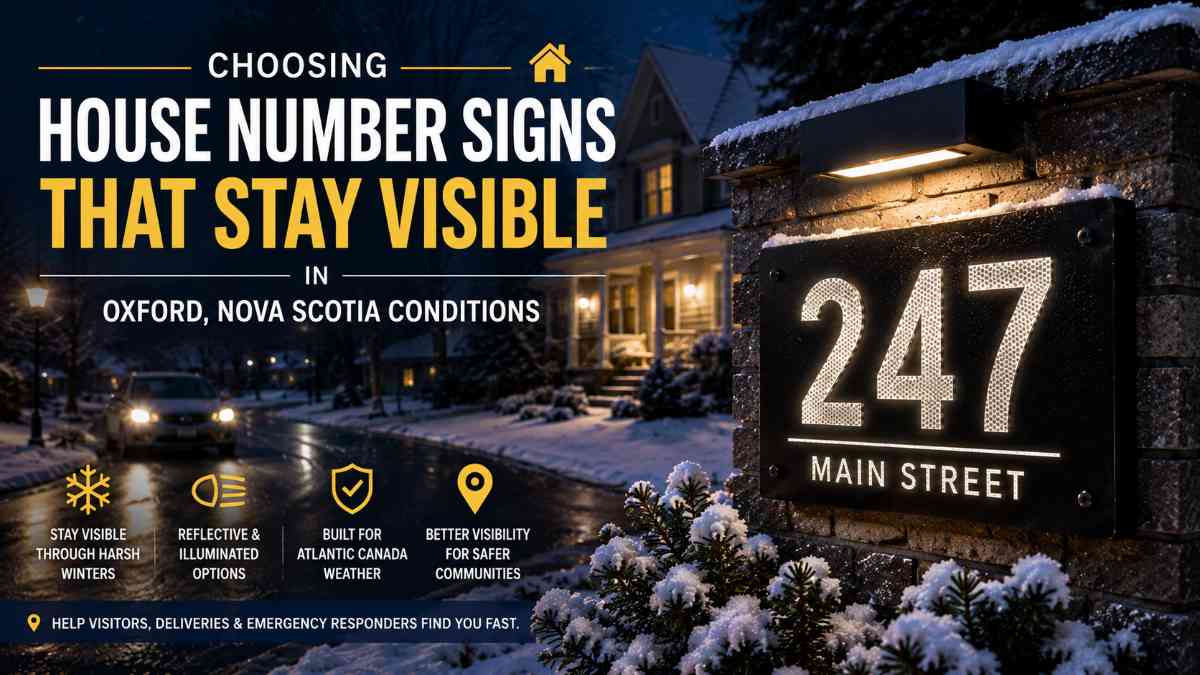
Across Oxford and surrounding Cumberland County areas, homeowners often discover visibility problems gradually. Landscaping growth, fading finishes, low contrast, and poorly positioned signs may reduce readability over time without immediately drawing attention.
This guide explores the practical factors that affect address visibility in Oxford and explains how thoughtful placement, reflective materials, lighting, and durable outdoor signage can improve residential identification throughout changing Atlantic Canadian conditions.
Visibility Challenges Common Across Oxford Properties
Residential layouts throughout Oxford vary considerably depending on neighborhood design, roadway spacing, and property setbacks.
Homes Positioned Farther Back From the Road
Many homes outside dense residential streets sit deeper on their lots, creating longer viewing distances for drivers approaching the property.
Common visibility issues include:
- Smaller address numbers becoming difficult to read
- Trees reducing roadside visibility
- Angled driveways limiting direct sightlines
- Lower evening visibility during winter months
As viewing distance increases, contrast and number size become more important.
Rural Roads and Lower Lighting Conditions
Outside central residential areas, some roads receive limited municipal lighting. During winter evenings, vehicle headlights often become the primary light source for identifying homes.
Under these conditions, darker signs without reflective visibility may become difficult to notice quickly.
Curved Roads and Angled Driveways
Not all properties face directly toward approaching traffic. Curved roads and angled driveways can reduce how early drivers identify address numbers.
Placement that considers actual driving approach angles usually improves readability more effectively than focusing only on front-facing appearance.
Winter Conditions Change How Address Signs Perform
Seasonal weather affects outdoor visibility differently throughout the year.
Snowbanks Can Hide Lower-Mounted Signs
One of the most common winter visibility problems involves signs mounted too low near driveways, fences, or landscaping features.
After repeated snowfall and plowing, snow accumulation may partially block:
- mailbox numbers
- driveway markers
- fence-mounted signs
- lower civic plaques
Signs mounted slightly higher generally remain visible longer during winter.
Rain and Wet Roads Reduce Nighttime Contrast
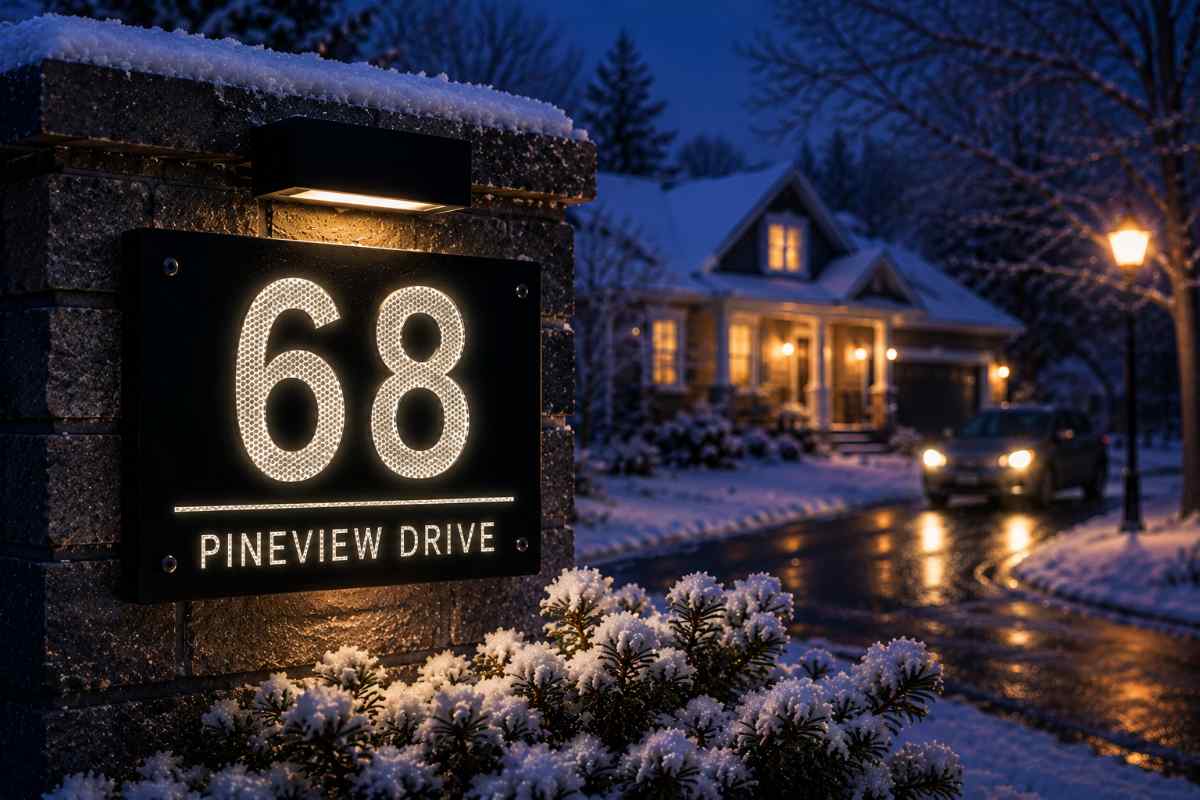
Rainfall and freezing conditions create reflective glare that changes how surfaces appear after dark.
Visibility problems often become more noticeable when:
- dark numbers blend into darker siding
- wet surfaces reflect surrounding light
- contrast weakens during storms
Higher contrast combinations usually remain easier to recognize during poor weather.
Fog and Snowfall Reduce Visibility Distance
Winter weather around Oxford can reduce how far ahead drivers identify addresses.
Reflective materials often help under these conditions because headlights illuminate the sign directly as vehicles approach.
Daytime Readability Does Not Always Mean Night Visibility
Many homeowners evaluate address visibility during daylight while standing near the property itself. Visibility conditions from the roadway during evening hours are often very different.
Decorative Fonts Can Reduce Readability
Stylized numbers may look attractive during daytime conditions but become difficult to identify at night.
Examples include:
- script-style fonts
- compressed characters
- narrow numbering
- decorative outlines
Simple number shapes generally remain easier to recognize quickly from moving vehicles.
Exterior Lighting Sometimes Creates Shadows
Porch lights and decorative fixtures do not always illuminate address numbers evenly.
In some situations:
- entry lights create glare
- shadows hide parts of numbers
- lighting angles reduce visibility
Testing visibility from the roadway at night often reveals problems that are less noticeable during daytime conditions.
Dark Siding and Low Contrast Combinations
Modern exterior designs commonly use:
- charcoal siding
- dark grey finishes
- black trim
- muted color palettes
When address numbers use similar tones, readability can decrease significantly during rain, fog, or evening conditions.
Placement Often Matters More Than Sign Design
Homeowners frequently focus on style and materials while overlooking placement visibility from approaching vehicles.
Front Door Placement Does Not Always Help Drivers
Numbers mounted beside entryways may remain easy to see for visitors standing near the home but difficult to identify from the street.
This becomes more common when properties include:
- covered porches
- deeper front yards
- landscaping near entrances
- angled home orientation
Driveway Entrance Placement Improves Earlier Recognition
For properties with longer setbacks, driveway entrance placement often helps drivers confirm the address sooner.
Benefits may include:
- earlier visibility from the road
- improved nighttime recognition
- easier identification during snow conditions
Corner Lots Need Visibility From Multiple Angles
Homes positioned on intersections sometimes require visibility from more than one direction.
Placement should account for how drivers naturally approach the property rather than relying on a single viewing angle.
Reflective House Number Signs in Oxford Neighborhoods
Reflective signs improve visibility differently than standard painted numbers.
Why Reflective Materials Help During Winter
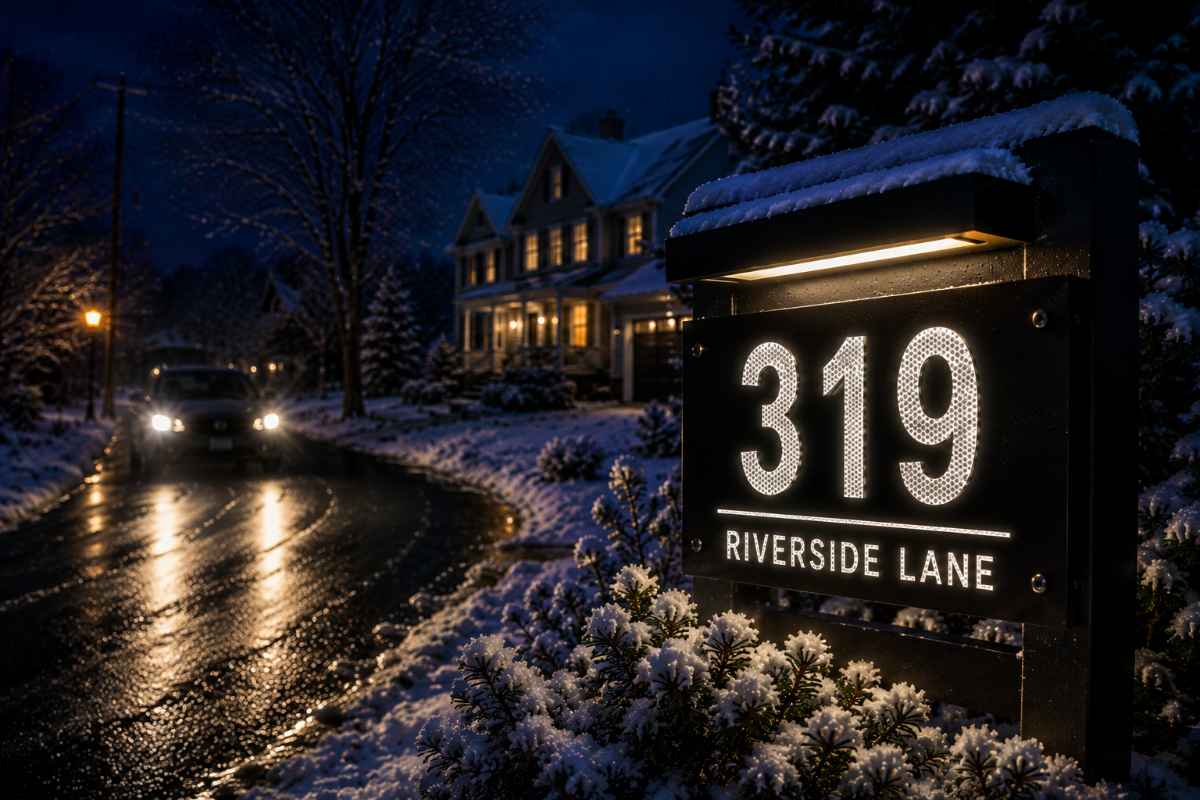
Reflective surfaces respond directly to headlights, improving readability during:
- snowfall
- fog
- darker evenings
- rain conditions
This allows drivers to identify addresses earlier without depending entirely on nearby lighting.
Reflective Visibility for Rural Properties
Homes positioned farther from the roadway often benefit more noticeably from reflective materials because viewing distance becomes a larger factor.
Neighborhoods With Limited Evening Lighting
Some Oxford streets receive lower ambient lighting after sunset. Reflective signs can improve visibility considerably under these conditions.
Materials That Handle Nova Scotia Weather More Reliably
Outdoor signage remains exposed to changing weather throughout the year. Material durability affects both appearance and long-term readability.
Powder-Coated Aluminum Address Signs
Powder-coated aluminum remains popular because it offers:
- corrosion resistance
- consistent finish durability
- lower maintenance requirements
Acrylic and Composite Panels
UV-resistant acrylic materials are commonly used because they maintain:
- color consistency
- moisture resistance
- cleaner surface appearance
Exterior Hardware Also Affects Durability
Mounting systems experience repeated exposure to:
- moisture
- freezing temperatures
- snow accumulation
- seasonal expansion and contraction
Corrosion-resistant hardware helps improve long-term performance.
Illuminated House Number Signs for Lower Visibility Areas
Some Oxford properties benefit from illuminated address signs, especially during darker winter conditions.
Homes With Long Driveways
Properties positioned farther back from the road often require stronger nighttime visibility support.
Areas With Frequent Fog or Snowfall
Illuminated signs maintain visibility more consistently because they do not depend entirely on external light sources.
Shared Driveways and Multi-Unit Properties
Additional visibility can help reduce confusion for visitors and delivery drivers navigating shared entrances.
Questions Oxford Homeowners Often Ask
How large should house numbers be for homes farther from the road?
Larger numbers generally improve readability as viewing distance increases, particularly during winter evenings and poor weather conditions.
Are reflective house numbers useful in residential neighborhoods?
Reflective materials often improve nighttime visibility even on standard residential streets, especially during darker winter months.
Where should address signs be mounted on long driveways?
Driveway entrance placement frequently provides stronger visibility than mounting signs close to the front door.
Which materials perform best during Nova Scotia winters?
Powder-coated aluminum, UV-resistant acrylic, and corrosion-resistant hardware generally perform well throughout changing Atlantic Canadian weather conditions.
Do illuminated signs improve visibility during snowstorms?
Illuminated address signs often remain easier to identify during snowfall, fog, freezing rain, and lower lighting conditions.
How often should address visibility be checked?
Seasonal visibility checks help identify problems caused by landscaping growth, fading finishes, snow accumulation, and changing lighting conditions.
Looking at Your Property From the Road Instead of From the Front Entrance
Many visibility issues become easier to recognize when viewing the home from the perspective of someone arriving for the first time. Walking toward the property from different directions during evening hours often reveals contrast problems, blocked sightlines, or placement issues that remain less noticeable during everyday routines.
In Oxford and surrounding Nova Scotia communities, small adjustments in sign placement, visibility height, reflective contrast, or lighting can significantly improve how quickly a property is identified during winter conditions without changing the overall appearance of the home.
Legal Requirements for Address Visibility in Oxford
Under the National Fire Code of Canada 2020 (Section 2.2.1.2) and Cumberland County's municipal property standards, Oxford homeowners are required to display their civic address number in a position visible from the street. Address numbers must be maintained and remain unobstructed year-round.
This requirement supports emergency response, mail delivery, and visitor access. Ensuring your address sign remains visible through winter conditions helps you stay compliant with local regulations.
For a full breakdown of what the law requires, see our Nova Scotia House Number Law Guide.
Related Guides
Frequently Asked Questions About House Number Signs in Oxford
Is a civic number required in Oxford, Nova Scotia?
Yes. Nova Scotia's civic addressing rules apply in Oxford and across Cumberland County — your number must be visible from the road. See the NS law guide.
What works for homes on Highway 321 or rural routes?
A reflective or illuminated post-mounted civic number at the end of the driveway is the most reliable option where houses sit far from the road.
What sizes do you offer?
From 3-inch to large-format numbers. Our size guide matches number height to your distance from the road.
How much do they cost?
Metal numbers from about $20 per digit, illuminated from $65 per digit, free shipping — see the cost guide.
Order Your Oxford House Number Sign
Design online — illuminated or non-illuminated — or call +1 (833) 860-9292 and we will design it for you.